

FOR PROBATE ATTORNEYS & EXECUTORS
A steady guide through process that isn’t always steady
Probate has its own timeline, its own rules, and its own pressure. I'm a Certified Probate & Trust Specialist (CPRES) — my job is to take the real estate piece off your plate and handle it the way the court, the heirs, and your firm all need it handled.
THE PROBLEM I SOLVE
Executors are managing a full life. Probate isn't supposed to be a second job.
Most people serving as executor or trustee are doing it for the first time, often while grieving, while juggling their own household, and while trying to follow a court process they've never seen before. My role is to make the real estate part of that process predictable, so you and your attorney can focus on everything else the estate needs.
- CPRES-certified: trained specifically in probate timelines, terminology, and requirements
- Comfortable coordinating with multiple heirs and beneficiaries with different priorities
- Clear, documented communication your firm and the court can rely on
- A vetted network of vendors for clean-outs, repairs, and prepping an estate property
- Bilingual — English & Spanish, so nothing gets lost with heirs or family members

THE PROBATE REAL ESTATE JOURNEY
What actually happens, start to close
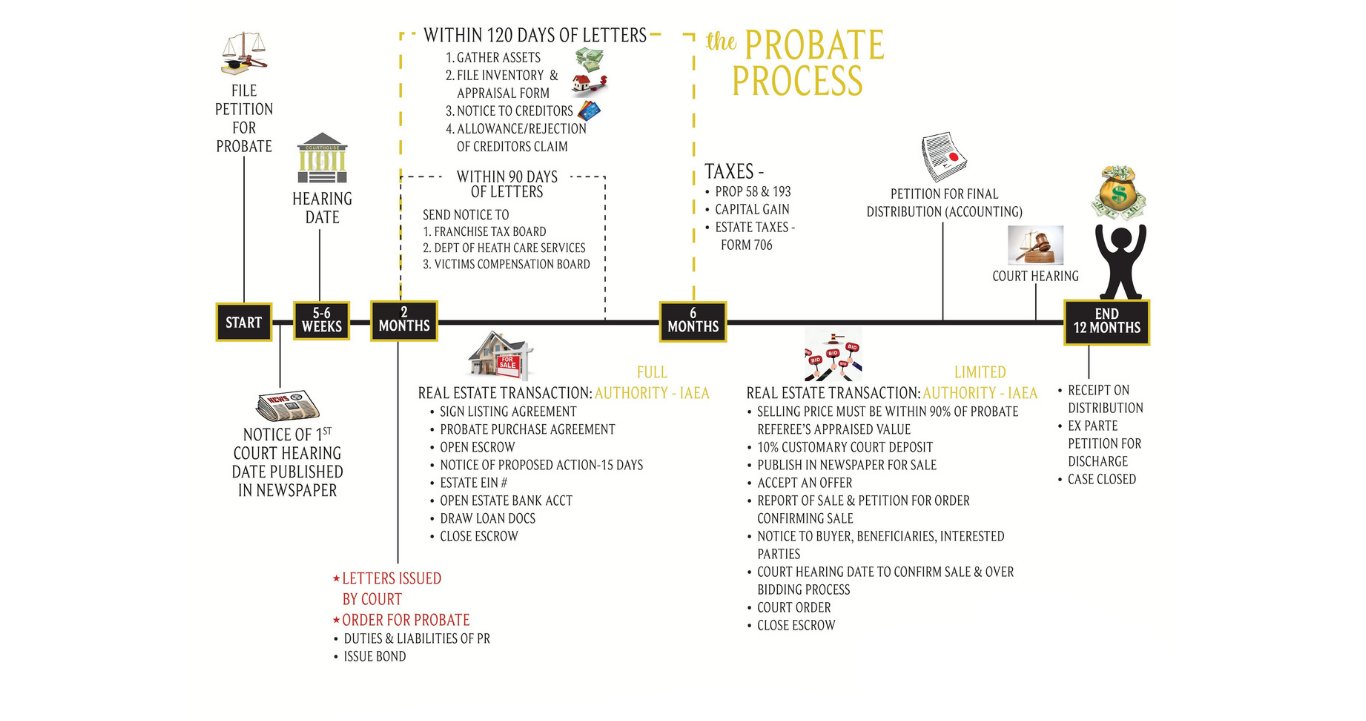
Probate typically runs about 12 months from filing to final distribution. Here's the shape of it — and where I step in to carry the real estate portion.

Filing & Court Approval
Petition for probate is filed; hearing date set
Notice of first hearing published
Letters issued by the court & Order for Probate granted
Duties, liabilities, and bond (if required) established for the personal representative
Listing & Sale
Full Authority (IAEA): listing agreement, probate purchase agreement, escrow opened, notice of proposed action, estate EIN, estate bank account, close of escrow
Limited Authority (IAEA): price set within 90% of the probate referee's appraisal, 10% court deposit, published for sale, court confirmation hearing with overbidding, final court order, close of escrow
Relevant tax considerations flagged early — Prop 58/193, capital gains, estate tax (Form 706) — always in coordination with your attorney and CPA
Estate Administration
Assets gathered; inventory & appraisal filed
Notice to creditors, plus required notices to state agencies
Creditor claims reviewed — allowed or rejected
Final Distribution
Petition for final distribution (accounting) filed
Court hearing held
Proceeds received and distributed; case closed
Full vs. Limited Authority matters. Whether the estate has full or limited authority under the Independent Administration of Estates Act changes what's required to sell — from court confirmation and overbidding to how pricing is set against the probate referee's appraisal. I build the listing and sale strategy around whichever authority applies to your case.
PARTNERING WITH YOUR FIRM
One referral, and it's handled
I'm glad to provide market valuations for estate planning or court purposes, meet with heirs directly, or simply be the name you keep on hand for probate and trust listings. The goal is always the same: make your job easier and your client's experience less stressful.